Eccentric Training: Why It’s the Big Deal
If you have ever struggled to lower a heavy weight slowly after grinding it up, you have already felt the truth at the heart of eccentric training: your muscles are far stronger when they lengthen under load than when they shorten. That single fact has big consequences for how much muscle and strength you can build, and most training quietly ignores it.
What eccentric training actually is
Every resistance rep has two halves. The concentric phase is the lift, when the working muscle shortens to move the load. The eccentric phase is the lowering, when that same muscle lengthens while still producing force to control the descent. Curling a dumbbell up is concentric; lowering it back down under control is eccentric.
Eccentric training simply means giving that lowering phase the attention it deserves rather than treating it as a throwaway on the way back to the start. The lowering reps you may have heard called negative reps are exactly this idea, deliberately emphasizing the part of the rep where the muscle is strongest. For a fuller breakdown of the two phases, see concentric vs. eccentric muscle contractions.
Why muscles are stronger eccentrically
This is not a quirk of a few lifts. It is true for essentially every skeletal muscle: you can lower more than you can lift. A muscle resisting a force greater than it can overcome will lengthen while still generating high tension, and it can produce meaningfully more force in that state than it can while shortening.
The reasons sit at the level of muscle physiology. During lengthening, the actin and myosin cross-bridges behave differently than they do while shortening, and passive structures such as titin and the surrounding connective tissue add tension as the muscle stretches under load. Together these let the muscle express more force eccentrically than concentrically. It is why a training partner can help you grind out a lift you could never complete alone, and you can still lower it under control on your own.
Why most training under-loads the eccentric
Here is the problem hiding in plain sight. With a barbell, dumbbell, weight stack, or any fixed load, the weight is the same in both directions. You can only lift what you can lift concentrically, which means the eccentric is loaded with that very same number, the lighter of your two capacities.
So on every rep with conventional weights, the lowering phase, the half where you are strongest, gets loaded to the weaker, concentric limit. The stronger half of the movement is left working well below what it can handle. You are leaving stimulus on the floor on every single rep, set after set, year after year.
Specialized eccentric techniques try to work around this with spotters, drop catches, or accentuated tempos, but they are awkward, hard to repeat precisely, and rely on someone else to apply and remove load safely. The fix people reach for is eccentric overload: loading the lowering phase closer to its real capacity instead of capping it at what you could lift.
The strength and muscle payoff
Why chase the eccentric at all? Because the lowering phase is tightly linked to the adaptations most people train for. Mechanical tension on a muscle is a primary driver of growth, and the eccentric is where you can generate the most of it. Loading that phase properly tends to mean a stronger stimulus for both strength and muscle.
The lengthening phase is also where most of the productive muscle remodeling is provoked. Controlled, well-loaded eccentrics signal the body to repair and build, which is a meaningful part of why a session leaves you adapting upward. Just as important, eccentric work lets you reach a high level of effort without needing to move a punishing absolute load through your weakest range, which can make demanding training more accessible.
The takeaway: if the eccentric is your strongest phase and a primary route to strength and size, then loading it fully on every rep is one of the highest-leverage changes you can make to your training.
How ARX overloads the eccentric on every rep
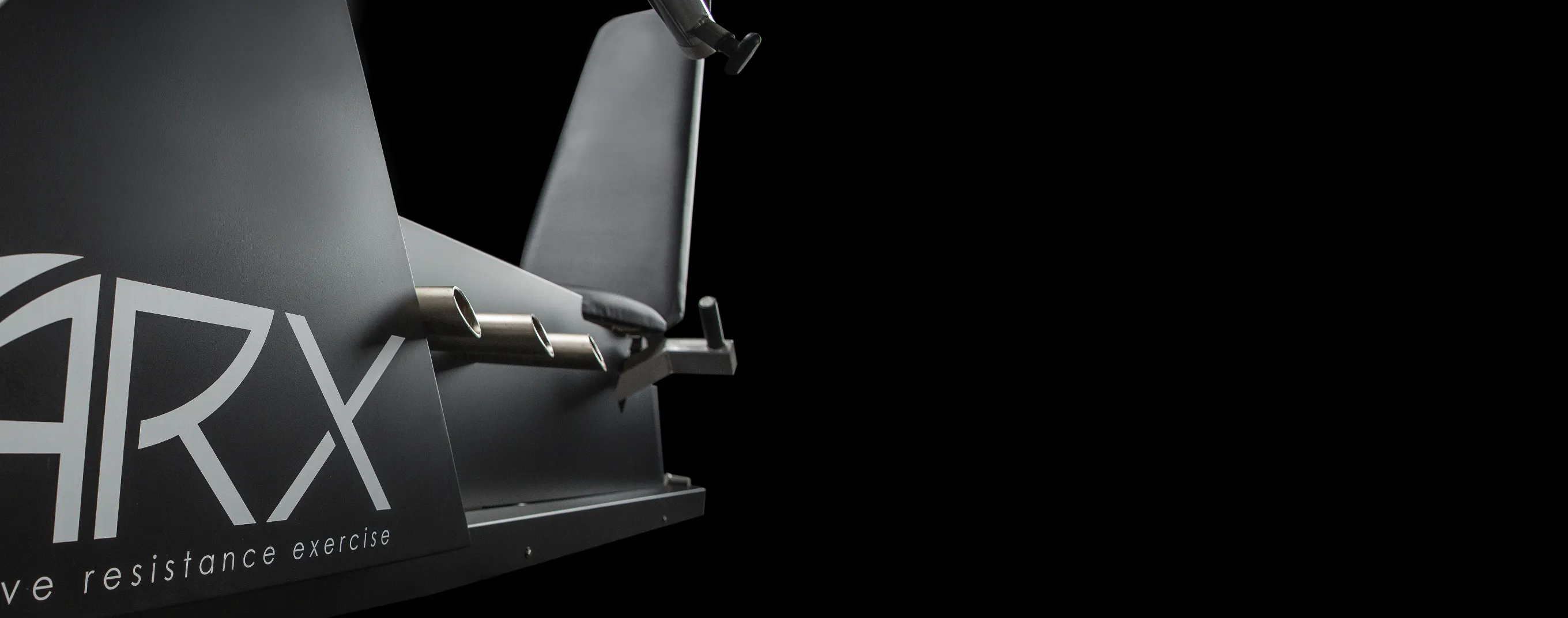
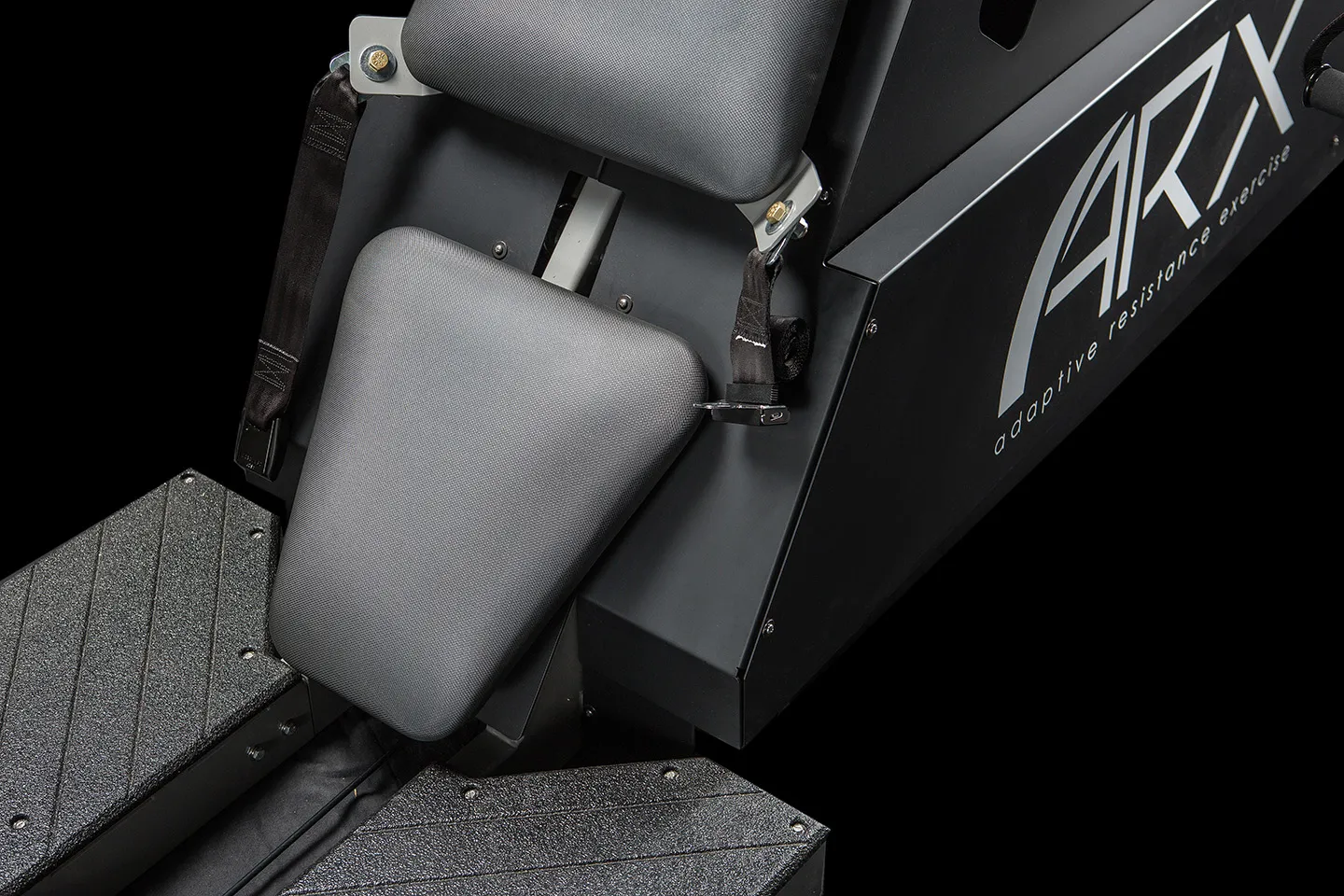
This is precisely the gap ARX machines are built to close. Instead of a fixed weight, ARX uses a computer-controlled motor that matches resistance to your exact force through the entire rep, including the lowering phase. You push as hard as you can on the way up, and on the way down the machine pushes back harder, loading the eccentric to your true capacity rather than to your concentric limit.
Because the resistance is generated by a motor rather than a stack, there is no fixed number capping the negative. Every rep can deliver real eccentric overload automatically, with no spotter, no drop catches, and no manual plate changes. And since resistance only ever matches your effort and can be released instantly, it never overloads a joint, so injury risk stays very low even as the eccentric load climbs.
ARX also captures force data on every rep, so the eccentric stops being a guess. You can see, rep to rep and session to session, exactly how much force you produced on both phases and whether you are actually progressing. That is the core idea behind adaptive resistance: resistance that adapts to you, moment by moment, instead of forcing you to fit a fixed weight. The result is a lowering phase that is finally loaded the way your physiology can handle, on every rep, with the numbers to prove it.
Frequently asked questions
What is eccentric training?
Eccentric training emphasizes the lowering phase of a movement, when a working muscle lengthens under load. It is the opposite of the concentric phase, where the muscle shortens to lift the weight. Because muscles can handle more force while lengthening, the eccentric is where the heaviest, most productive loading happens.
Why are muscles stronger eccentrically?
During an eccentric contraction the muscle resists a force greater than it can lift, so it produces tension while lengthening rather than shortening. The behavior of the actin and myosin cross-bridges, along with passive structures like titin and connective tissue, lets a muscle express more force eccentrically than concentrically. That is why you can lower a weight you could never lift on your own.
What is eccentric overload and why does it matter?
Eccentric overload means loading the lowering phase closer to its true capacity instead of being capped by what you can lift. With a fixed weight you can only load the eccentric with the same amount you lifted, which under-loads it. Eccentric overload restores that lost stimulus, which is closely tied to gains in strength and muscle.
How does ARX overload the eccentric on every rep?
ARX uses a computer-controlled motor that matches resistance to your exact force through every rep, including the lowering phase. Instead of a fixed weight, the machine pushes back as hard as you push, so the eccentric can be loaded to your full capacity. Force data is captured on every rep, and because resistance never overloads a joint, injury risk is very low.
Load the half of the rep that matters most
See how ARX overloads your eccentric on every rep, with the force data to prove it. Book a call and feel the difference for yourself.